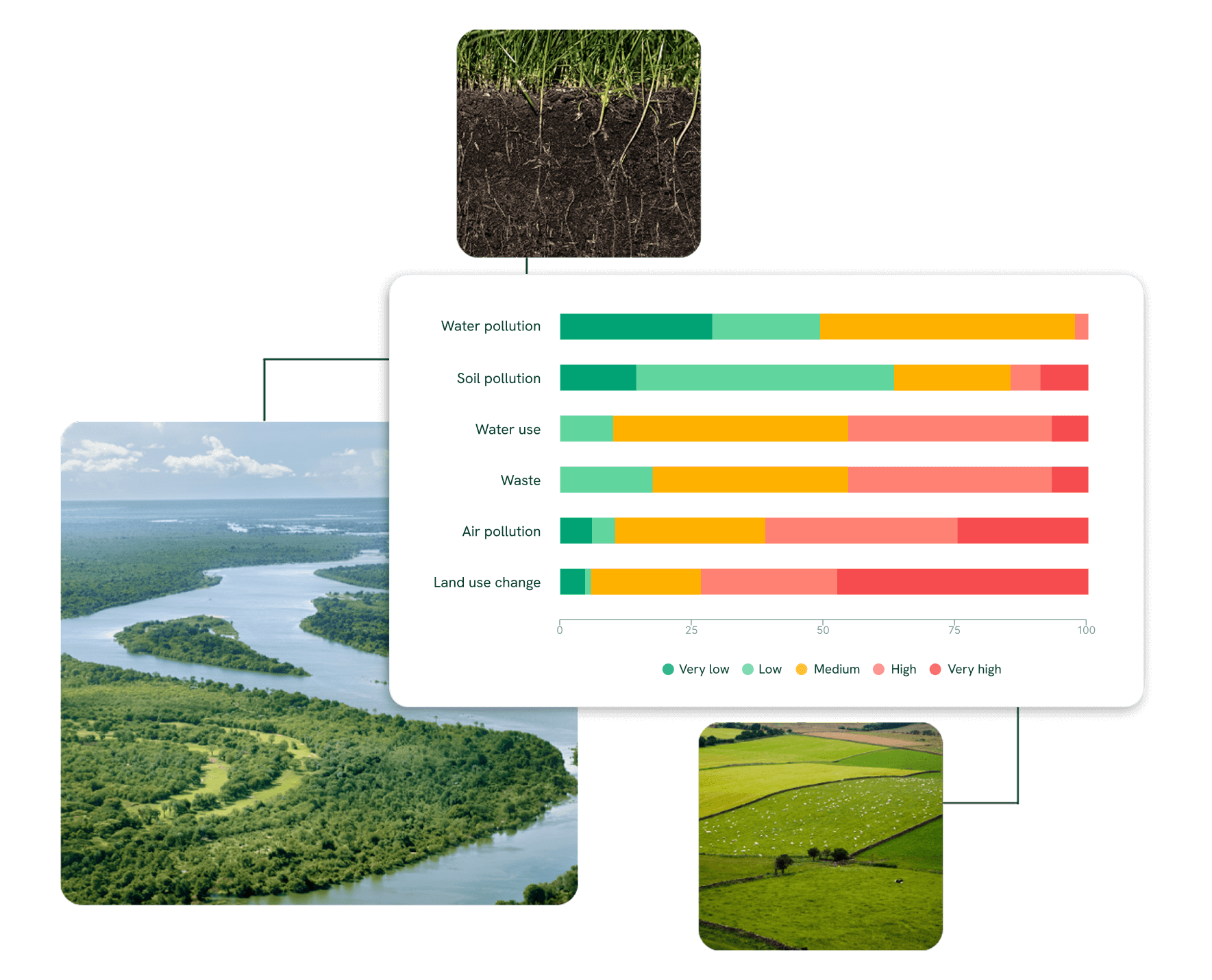
Designing a self-service platform for measuring nature-related impacts & dependencies
Helping sustainability teams explore and prioritise how their organisation both impacts and depends on nature.
Natcap helps large organisations understand how their business both depends on and impacts nature across their global supply chains. Until now, these insights were delivered through consultant-led projects, making them difficult to scale and limiting customers' ability to explore and understand the data themselves.
As the sole Product Designer, I led the design of Natcap's first self-service platform module, translating complex environmental science into an experience that helped users confidently explore, understand and act on their data.
My role
Sole Product Designer
Discovery → Delivery
User Research
Product Strategy
AI Prototyping
The challenge
Sustainability teams needed to understand where their organisation had the biggest impacts and dependencies across its supply chain. The science was complex, and customers often relied on consultants to interpret the results.
How might we help users confidently explore and prioritise nature insights on their own?
Understanding the problem
Before designing anything, I wanted to understand how sustainability teams currently worked and where they struggled.
To do this I:
Interviewed sustainability professionals
Ran workshops with our consulting team
Reviewed consulting outputs
Worked closely with scientists to understand the methodology
One thing became clear: users needed both clarity and credibility. They had to quickly identify what mattered, but they also needed enough evidence to explain and defend those insights when influencing decisions across the business.
Key insights




Exploring solutions
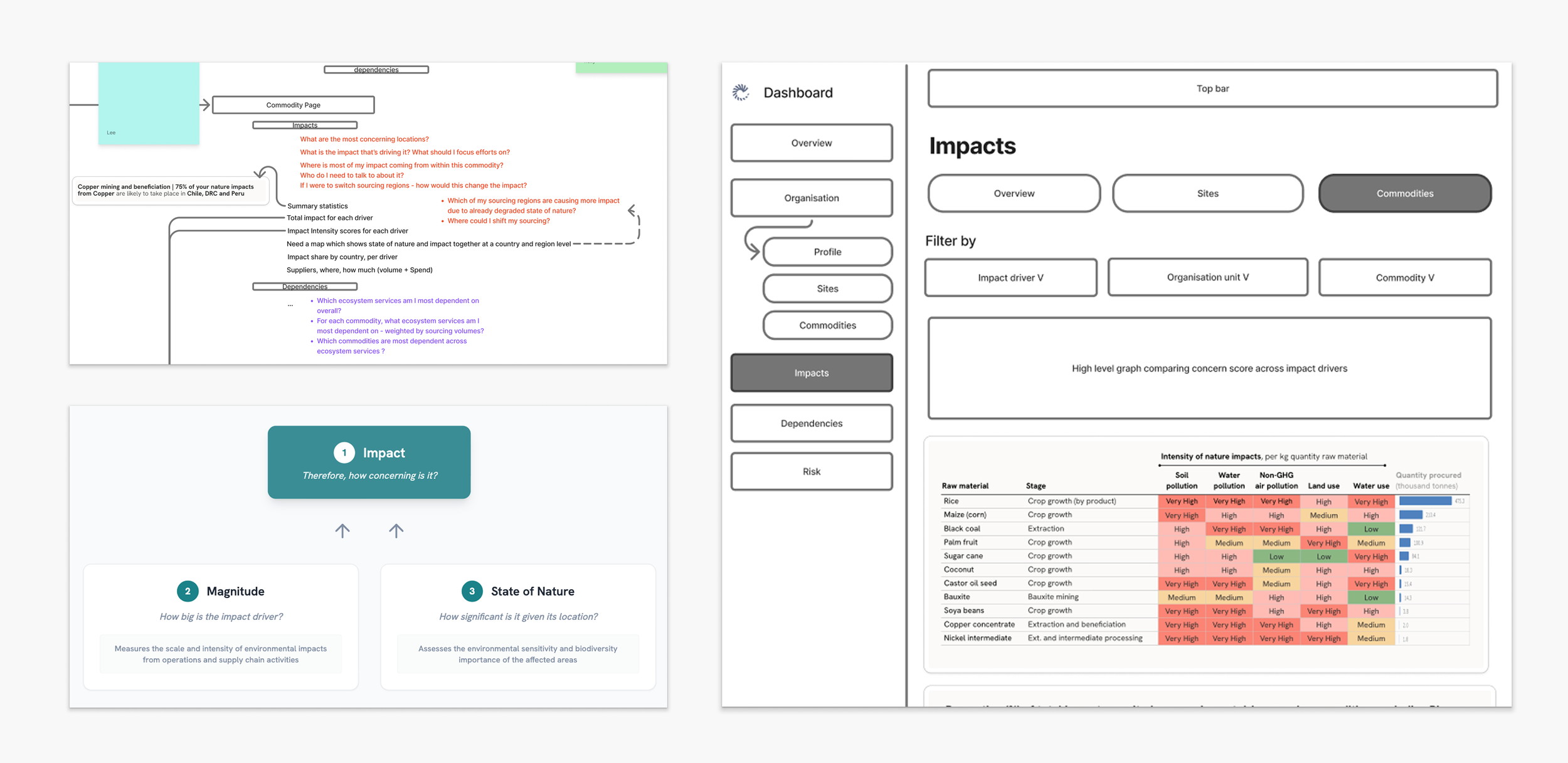
I worked closely with Product, Science and Engineering to explore different ways of presenting complex environmental data.
Alongside workshops, wireframes and user flows, I introduced AI-assisted prototyping to rapidly test ideas with users and engineers before development.
The solution
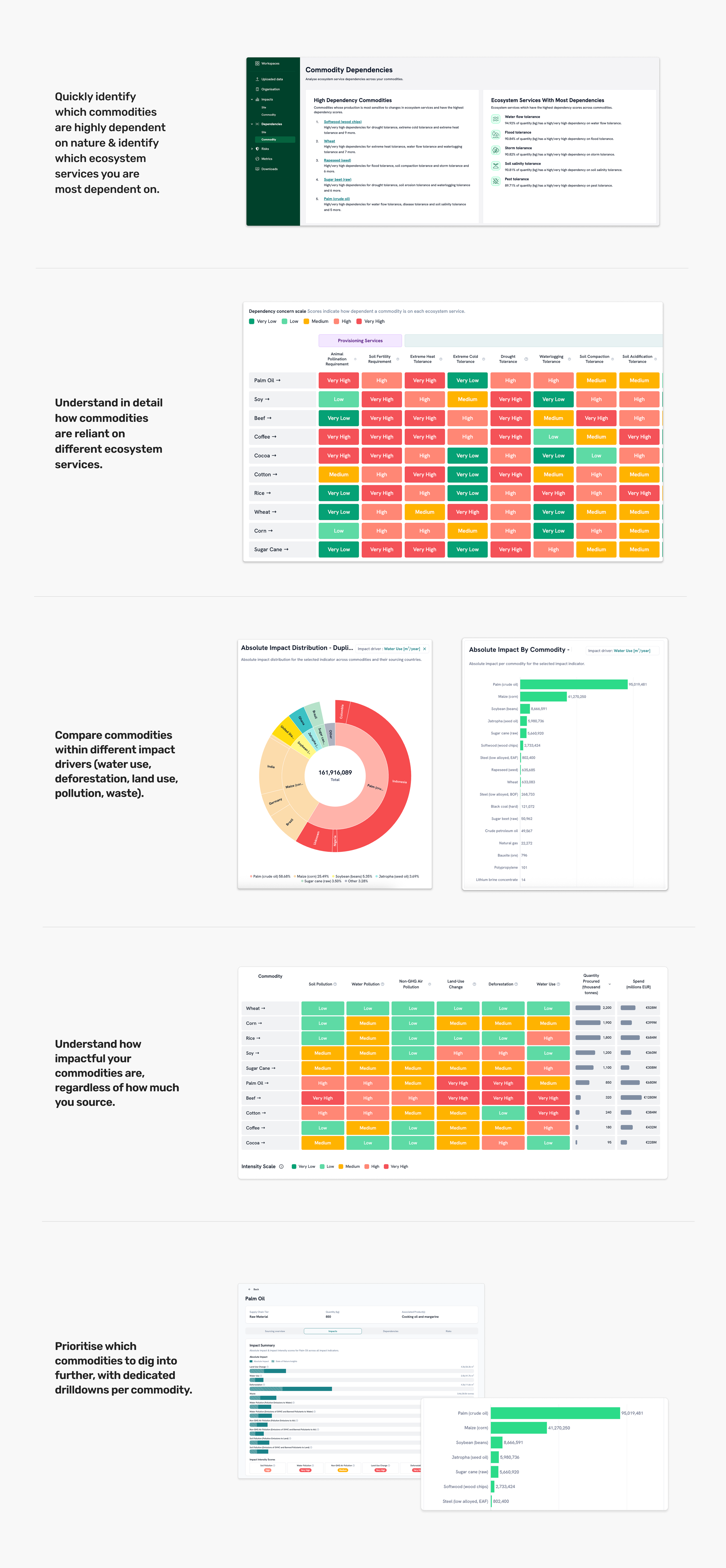
Working within constraints
The module was built using Metabase, which meant designing within the limits of a BI tool.
Rather than aiming for pixel-perfect implementation, I worked closely with engineers to understand what was possible and focused on the interactions that delivered the most value.
Beyond the product
This project also changed how our team worked.
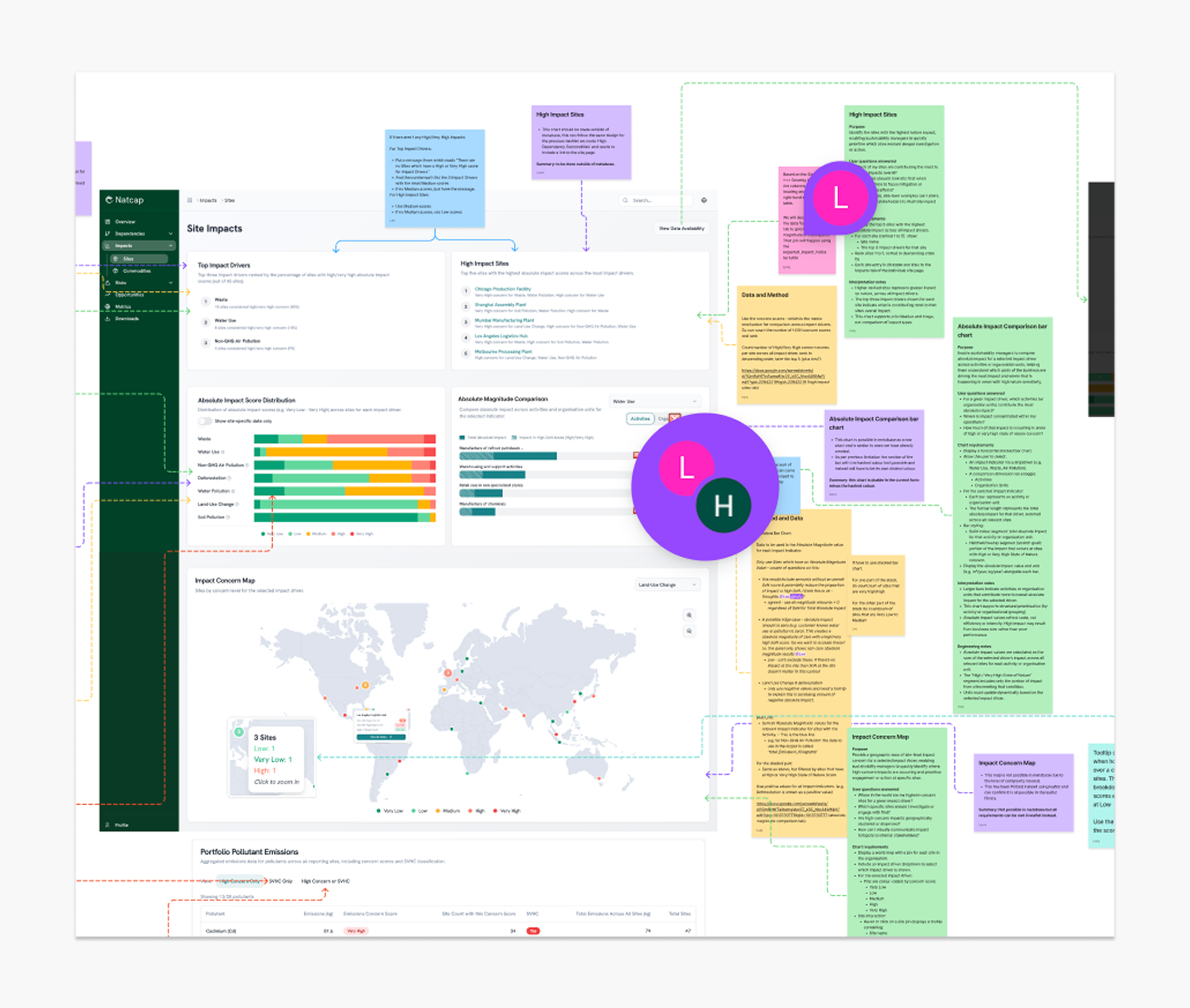
I introduced a shared design workspace, brought scientists into discovery earlier, and created clearer ways for Product, Science and Engineering to collaborate.
This reduced rework and helped the team make decisions faster.
Outcomes



